

Trying to choose between carpet and luxury vinyl plank usually gets harder right when the showroom stops helping. Both can look like good family flooring on a sample board. The problem starts once you translate that sample into real life: pet accidents, muddy paws, spilled drinks, shedding, toy drops, noise, nap time, crawling babies, and the question most families are really asking—what will be easier to live with a year from now?
For Oklahoma City homeowners, that decision also has to survive real house conditions. Slab foundations, seasonal humidity changes, and normal movement in the home affect how flooring behaves after installation. That is why this choice is rarely settled by appearance or price alone. The better question is which option is less likely to create ongoing frustration in the way your family actually lives.
Where Family Life Shows up Fastest
For homes with pets and kids, the biggest difference between carpet and LVP usually appears early. Not because one is universally better, but because they fail in different ways.
LVP tends to reduce daily cleanup friction. If your household regularly deals with wet shoes, food spills, pet accidents, craft messes, and constant traffic between the kitchen, living room, and back door, a hard surface usually creates less work. The mess stays on top, which means it is more likely to be wiped up before it turns into a lingering problem.
Carpet solves a different problem. It is quieter, warmer, and softer. For bedrooms, floor play, and homes with young children spending time crawling or sitting on the floor, that comfort can matter every day. It also absorbs sound in a way hard surfaces do not, which changes how the house feels when kids are running, toys are dropping, and people are moving room to room.
Where homeowners often get tripped up is comparing visible features instead of recurring friction. A household with one older pet, fewer spills, and mostly bedroom use may be perfectly happy with carpet in the right spaces. A household with multiple dogs, regular muddy traffic, and constant activity in the main living areas may find that carpet becomes a cleanup cycle they did not really intend to buy.
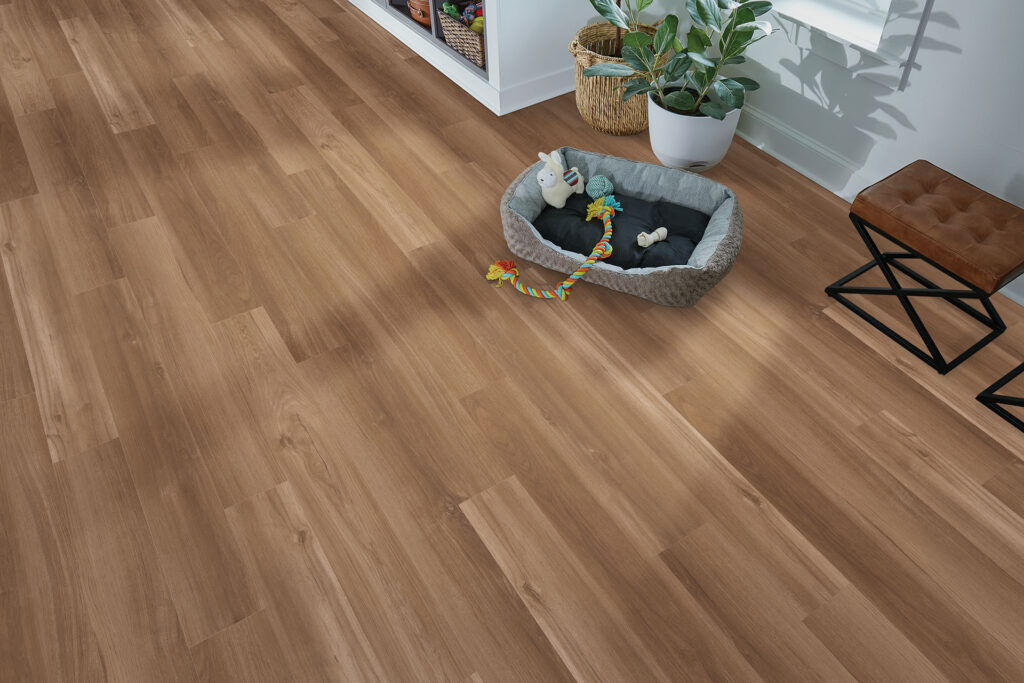
Pets, Spills, and the Cost of Easy Cleanup
If pets are driving the decision, LVP usually has the advantage in main traffic areas. Accidents, water splashes, muddy paws, and shedding are generally easier to manage because they stay at the surface. That does not mean every LVP floor is immune to damage. Active dogs can still scratch some products, especially with long nails or rough play. But the practical difference is that most messes are easier to remove before they become odor, staining, or repeated deep cleaning.
Carpet creates more consequences once moisture or accidents get past the surface. Hair works down into the fibers. Odors can stay if the pad gets affected. Spot cleaning may solve the visible issue but not always the full one. That is often the point where a lower upfront price starts to look different over time.
Children create a similar tradeoff. Carpet is more forgiving for crawling, playing, and falling. LVP usually makes life easier when juice spills, snacks get crushed into the floor, or markers and craft supplies miss the table. So the real question is not which one is better with kids. It is whether your floor is more often being used as a soft play surface or as a cleanup surface.
In Oklahoma homes, that day-to-day reality also overlaps with house conditions. On slab foundations, moisture and subfloor conditions matter. Installation matters. Product selection matters. A floor that seems like the right answer in a showroom can become the wrong answer if the home conditions and installation approach are not a match.
Comfort, Noise, and How the House Feels to Live In
A lot of families choose based on durability first, then realize later that livability matters just as much. Carpet changes the way a room feels and sounds. In bedrooms, playrooms, and upstairs spaces, that can be a meaningful advantage. If children spend time on the floor, or if you simply do not want every footstep and dropped toy to sound sharper, carpet often improves daily comfort in a way LVP does not.
LVP creates a cleaner and more wipeable surface, but it is still a hard floor. Underlayment and product construction can help with sound and feel, but they do not make it behave like carpet. Some families are completely comfortable with that tradeoff because easier maintenance matters more. Others install hard surface flooring everywhere and only then realize the home feels louder and less forgiving than expected.
That is one reason mixed-flooring layouts often hold up better than all-or-nothing decisions. In many Oklahoma City homes, LVP makes more sense in entries, hallways, kitchens, dining areas, and main living spaces where spills and traffic are concentrated. Carpet often still makes sense in bedrooms and other lower-risk areas where softness, warmth, and quiet matter more.
The goal is not to force one product to win the whole house. It is to match the flooring to what each room has to handle.
Long-term Ownership Matters More Than the Showroom Sample
The floor with the lower entry price is not always the one that creates the lower ownership cost.
Carpet can make sense upfront, especially for homeowners trying to balance replacement needs with budget, included installation structure, or financing. But if your household produces frequent stains, odor issues, matting, or a need for repeated professional cleaning, that lower initial cost may not stay lower for long. Families with pets and kids often do not mind carpet itself—they mind replacing it sooner than expected in the hardest-used parts of the house.
LVP often performs better from a maintenance standpoint in active areas, which can reduce regret over time. But that does not mean every LVP product will perform the same, or that the installation side is minor. Subfloor prep, slab condition, product quality, and installation consistency all affect whether the floor stays stable, looks right, and wears the way you expected.
This is where many flooring comparisons become too generic. They compare product categories as if the home does not matter. In reality, flooring works as a system. In Oklahoma, that means the product, the home, and the installation all have to agree. Otherwise, people end up blaming the material for a problem that started with the fit.
A better way to decide is to ask:
- Do you want softer, quieter rooms enough to accept more upkeep?
- Do you need the easiest cleanup possible where your family spends the hardest use?
- Are pet hair, dander, or odor retention part of the concern?
- Are you trying to avoid replacing high-traffic flooring sooner than planned?
- Would carpet in some rooms and LVP in others solve the problem more cleanly?
Those questions usually get closer to the real answer than a side-by-side display in a showroom.
Is carpet a bad idea if you have pets?
No. It is usually more about placement than a blanket yes or no. Carpet can still work well in lower-risk spaces like bedrooms. It becomes a harder choice when accidents, muddy traffic, or heavy shedding are part of everyday life.
Does LVP get damaged by dogs’ nails?
It can. Some products resist wear better than others, but LVP is not scratch-proof. Product quality, finish, pet activity level, and nail maintenance all affect the outcome.
Which option is better for allergies?
Many homeowners prefer hard surface flooring because hair, dust, and dander are easier to remove from the surface. Carpet can still work, but it usually requires more consistent vacuuming and cleaning to stay ahead of buildup.
Should every room in the house have the same flooring?
Usually not. A mixed-flooring plan often creates fewer compromises. LVP may fit the main living and traffic areas better, while carpet may still be the better answer in bedrooms or quieter comfort-focused spaces.
Making the Decision Easier
If you are stuck between carpet and LVP, the most useful next step is not comparing one more sample. It is identifying where regret is most likely to come from in your house.
If the main risk is spills, pet accidents, muddy traffic, and heavy daily cleanup, LVP often makes more sense in those areas. If the main priority is comfort, quiet, warmth, and a softer place for kids to play or crawl, carpet may still be the better fit in those rooms. For many families, the best answer is not one or the other across the whole home.
For Oklahoma City homeowners, it also helps to evaluate the house before making the final call. Slab conditions, moisture exposure, room use, and installation details all affect long-term performance. A guided in-home estimate can help sort out whether carpet, LVP, or a combination of both is more likely to hold up well in your home, with your family, and over the way you plan to live there.