

Hardwood usually disappoints in Oklahoma for one of two reasons: people expect it to stay untouched, or they choose it without thinking through how their home actually lives. Families with dogs and kids, moving dining chairs, bright south-facing windows, and everyday moisture from cooking, mopping, and seasonal humidity all leave a mark over time. That does not mean hardwood is a short-lived floor. It means its lifespan has more to do with how it wears, how it is installed, and whether the owner understands what aging well really looks like. In Oklahoma City homes, hardwood can be one of the longest-lasting flooring investments available, but not because it avoids every scratch or dent. It lasts because it can mature, be maintained, and in many cases be renewed. The real question is not whether hardwood will show life. It is whether it will still look good, function well, and be worth keeping decades from now.
Hardwood Lasts by Aging, Not by Staying Perfect
A lot of flooring products are judged by how long they can resist visible wear. Hardwood works a little differently. It is a natural material, so over the years it will usually pick up small signs of use: light scratches, minor dents, subtle changes in sheen, and areas that mellow with age. For many homeowners, that is not failure. It is part of why they wanted hardwood in the first place.
A scratch in hardwood is not always the same kind of disappointment as a damaged synthetic surface. In many homes, it becomes part of the floor’s character. Unlike products that tend to look progressively more worn with no real path back, hardwood often remains desirable because it can be repaired, refinished, and kept in service. That is a big reason some hardwood floors still look beautiful after 20, 30, or 40 years while other floors are removed much sooner. The goal is not a floor that never changes. The goal is a floor that still belongs in the home after years of real use.
That is also why hardwood and luxury vinyl should not be judged by the same expectation. Luxury vinyl is often chosen because it handles everyday abuse with less visible change up front. Hardwood is often chosen because it can age with the home and still be renewed later. If a homeowner wants a floor that always looks uniform, hardwood may feel stressful. If they want a floor that can develop depth over time and still be restored, hardwood makes much more sense.
What Actually Shortens or Extends Hardwood’s Life
The biggest factors are usually not exotic. They are the ordinary things that happen every day in a busy house. Pets can leave nail scratches, especially if nails are not kept trimmed. Furniture movement matters more than most people expect, especially dining chairs, bar stools, and pieces that get dragged instead of lifted. Active family traffic creates patterned wear in hallways, kitchens, and entries. Sunlight also matters, particularly in Oklahoma homes with strong window exposure, where UV can gradually shift color and create uneven aging if rugs and furniture never move.
Maintenance habits make a major difference too. Hardwood does not need complicated care, but it does need the right kind. The floors that hold up best are usually in homes where grit is kept under control, spills are cleaned reasonably quickly, and the finish is not slowly damaged by overly wet mopping or harsh cleaners. Everyday moisture from shoes, pets’ water bowls, kitchen activity, and normal indoor humidity is manageable when the floor is properly selected and cared for. Repeated neglect is what turns ordinary wear into premature breakdown.
Some of the longest-lasting hardwood floors are not the ones with the fewest marks. They are the ones where wear stays cosmetic instead of becoming structural. That usually comes down to a combination of conditions:
- a product suited to the room and household
- proper installation
- realistic expectations about visible wear
- periodic maintenance before problems compound
When homeowners get disappointed early, it is often because they thought hardwood should behave like a damage-proof surface. It is more accurate to think of it as a finishable, renewable floor that rewards sensible care.
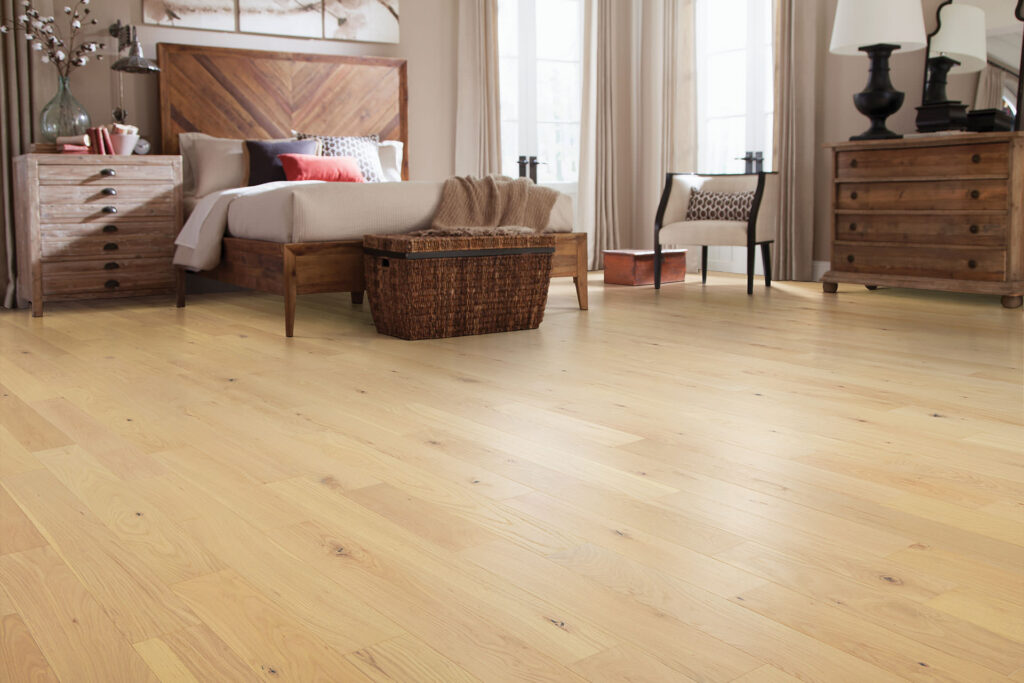
The Product and the Installation Both Matter
Not all hardwood ages the same way. One of the most important distinctions is solid hardwood versus engineered hardwood. Solid hardwood has a thicker wear layer and is often the better choice when long-term refinishing potential is a top priority. Engineered hardwood can also perform very well, especially in homes where stability matters, but the long-term renewal options depend on the thickness and construction of the top layer. Some engineered products can be refinished; some have more limited flexibility.
That matters in Oklahoma because seasonal humidity changes are real, and wood responds to its environment. Good performance over time depends on selecting a hardwood product that fits the space, the subfloor, and the home’s living conditions. This is one reason showroom-only decisions can go wrong. A floor that looks great on a sample board may not be the best long-term choice once room exposure, household traffic, and installation conditions are factored in.
Installation quality has a huge effect on lifespan, even when the product itself is good. Poor prep, rushed acclimation, uneven subfloor conditions, or installation methods that do not match the material can all create problems that show up later as movement, gapping, edge issues, or finish wear patterns that feel premature. Homeowners often focus on the visible plank, but long-term satisfaction usually comes from the whole system being aligned: product, home conditions, and installation execution.
Why Some Hardwood Floors Still Look Good Decades Later
The hardwood floors that age best are usually in homes where owners make peace with the material early. They understand that a lived-on hardwood floor will not stay showroom-clean forever, and they do not treat every mark as damage. Instead, they watch for the difference between normal aging and preventable deterioration. That mindset leads to better decisions over time, including using felt pads, managing pet nails, rotating rugs, and addressing maintenance before the finish fully wears through in high-traffic areas.
Refinishing is a major part of hardwood’s lifespan story. Many floors earn their longevity not because they avoid wear, but because wear can be reset. A floor may go through years of family use, then be sanded and refinished into a cleaner, fresher version of itself instead of being torn out. That is one of hardwood’s biggest long-term advantages. The life of the floor is not tied only to the condition of the original finish.
Premature replacement usually happens when the wrong floor was chosen for the lifestyle, the installation was compromised, or the owners expected hardwood to behave like an indestructible surface. When hardwood is selected with clear eyes, installed properly, and maintained with reasonable consistency, it often remains one of the few flooring choices that can become more established and more fitting with the home over time rather than less.
Is Hardwood a Bad Choice for Homes with Dogs and Kids?
Not necessarily. Hardwood can work well in active homes, but it will show use more honestly than some other flooring types. Families who do best with hardwood usually accept light scratching and denting as part of ownership and take simple steps to reduce avoidable wear.
Does Engineered Hardwood Last as Long as Solid Hardwood?
Sometimes, but it depends on the product construction and how the floor is used. Solid hardwood generally offers more refinishing potential over the long term, while engineered hardwood may offer better dimensional stability in certain conditions. The right choice depends more on the home and expectations than on a simple better-or-worse ranking.
Can Sunlight Really Affect Hardwood That Much?
Yes. Oklahoma sun can gradually change wood color and create uneven aging in rooms with strong exposure. This does not always harm the floor structurally, but it can affect appearance over time, especially if rugs and furniture stay in the same places for years.
When Is Hardwood Wear Normal, and When Is It a Problem?
Surface scratches, minor dents, and finish changes in traffic areas are usually normal. It becomes a bigger concern when wear goes beyond the finish, moisture is repeatedly affecting the floor, or movement and installation-related issues start changing how the floor feels or functions. That is when it helps to have the floor evaluated instead of guessing.
Making the Right Long-Term Decision
If you are considering hardwood in an Oklahoma City home, the smartest question is not “How many years will it last?” in the abstract. It is “Will this floor age in a way I can live with, maintain, and still value years from now?” For some households, that answer is clearly yes. For others, especially if visible wear will feel like constant frustration, a different flooring type may be a better fit.
Hardwood is a strong long-term investment when you want a floor that can mature, be repaired, and in many cases be refinished rather than replaced. The best results usually come from matching the product to the home, the household, and the expected use instead of buying based on appearance alone. If you want a realistic answer for your rooms, your traffic, and your expectations, an in-home estimate is the right next step. That is where hardwood stops being a category and becomes a decision based on how your home actually lives.